

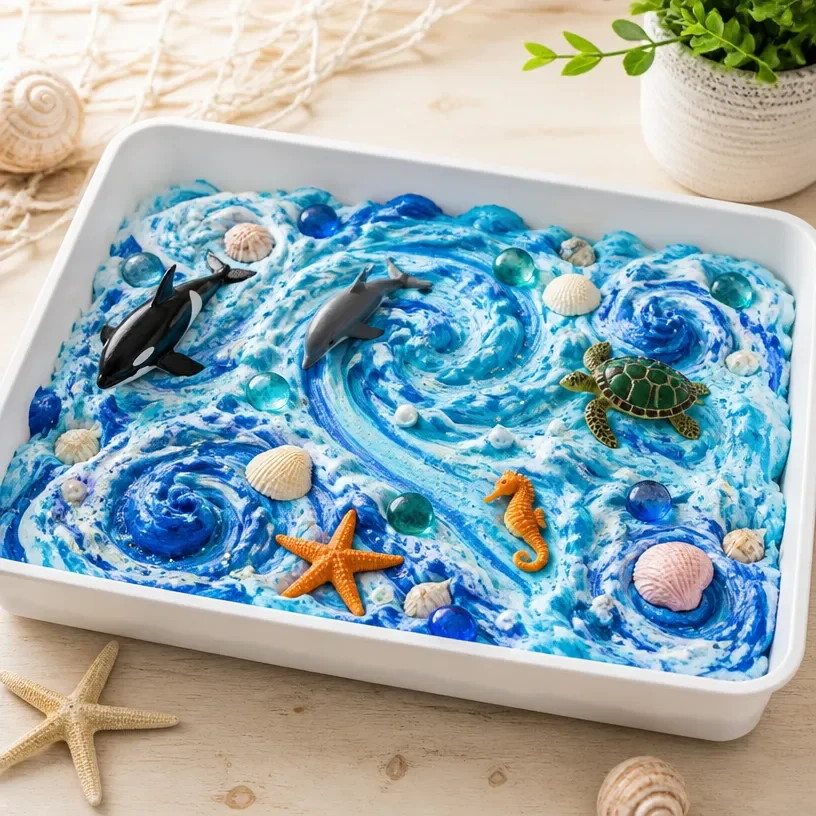
Ocean Foam Sensory Bin Ideas for Kids
Creating an ocean foam sensory bin is a delightful way for children to explore textures and enjoy imaginative play. This hands-on activity offers a playful way to learn about marine life and engage the senses with soft, bubbly foam. Kids will love to dig, scoop, and pretend, making it a perfect addition to any playtime routine. You may also find Bubble Dough Sensory Play For Kids useful.
Why You’ll Love This Project
- Sensory Exploration: The foam provides a unique texture that feels wonderful to touch and manipulate, stimulating sensory development.
- Imaginative Play: Kids can create their own ocean scenes with toys, shells, or even homemade ocean creatures, enhancing creativity.
- Easy Cleanup: Unlike many messy crafts, this project can be contained within a bin, making it easy to tidy up after playtime.
- Educational Value: While playing, children can learn about sea life, colors, and counting when incorporating different items into the bin.
You may also find Bubbly Dough Sensory Activities For Kids useful.
Materials You’ll Need
- A large shallow bin or container
- Foam soap (often found in colorful options)
- Water
- Small ocean-themed toys (like fish, crabs, or sea turtles)
- Measuring cup
- Optional: food coloring for added visual appeal
How to Make Ocean Foam Sensory Bin Ideas for Kids
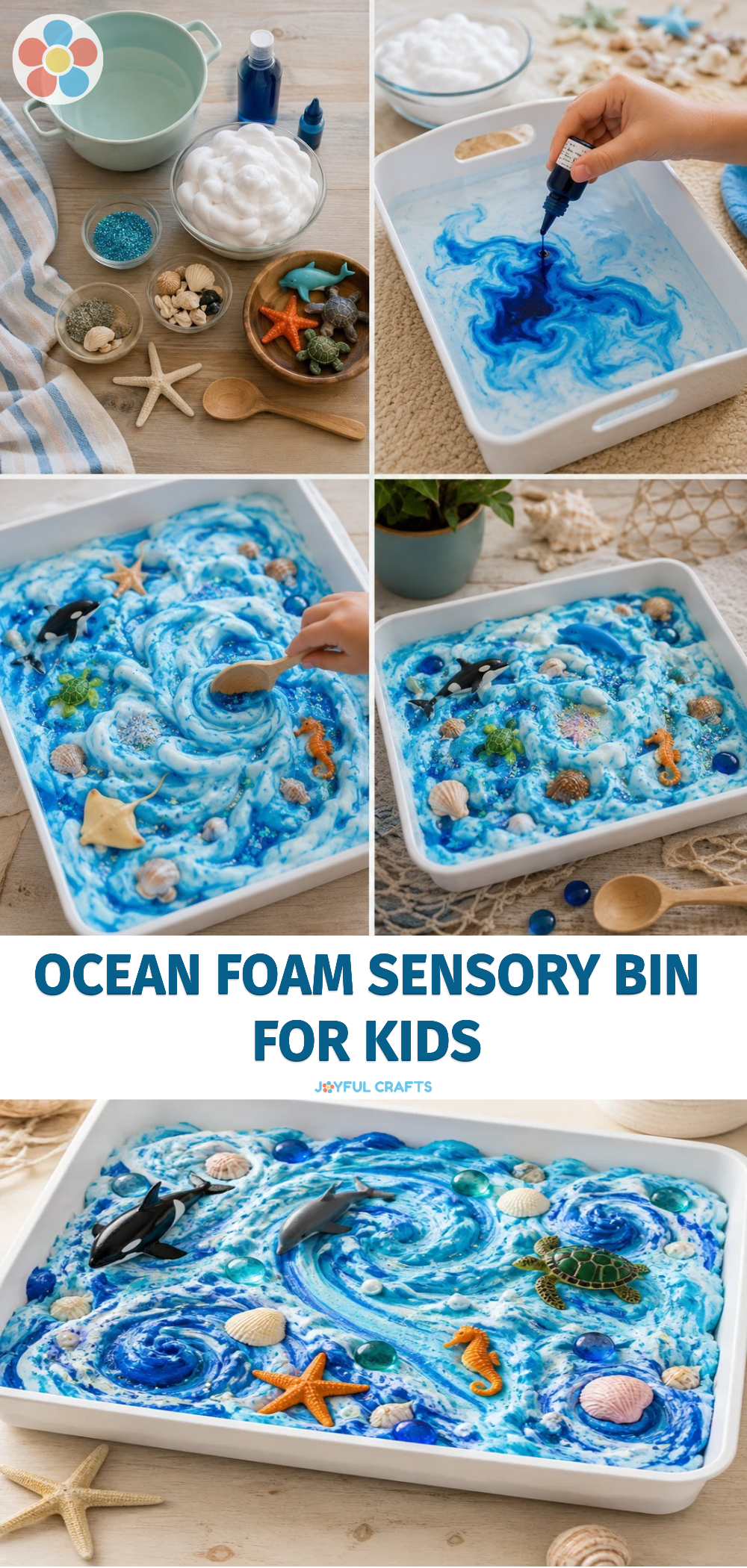
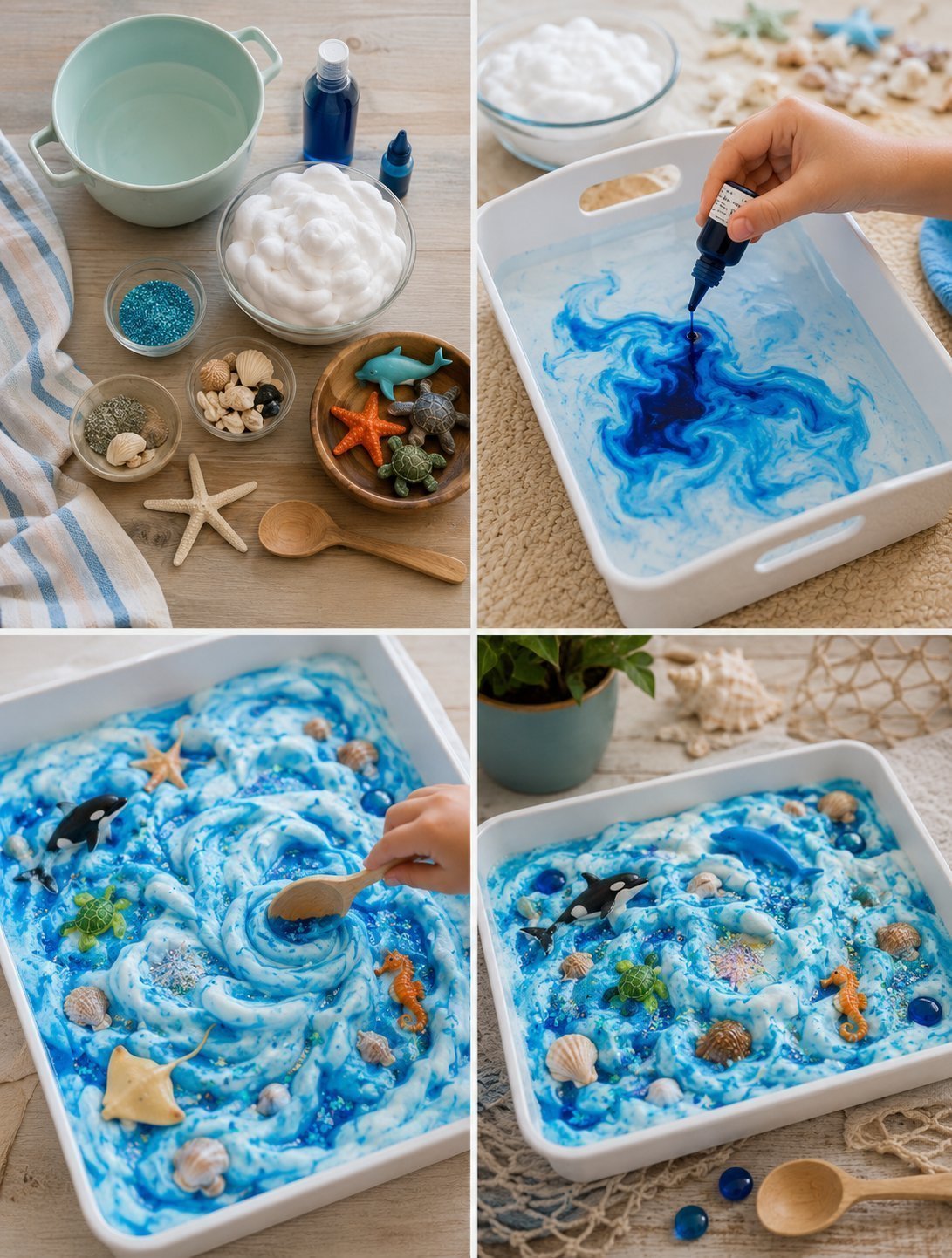
Prepare the Foam: In a mixing bowl, combine a generous squirt of foam soap and some water (the ratio can be roughly 1:2). Stir until you achieve a light, frothy consistency. If you want to add some color, incorporate a few drops of food coloring. You may also find 3D Raised Salt Painting Colorful Artwork For Kids useful.
Fill the Bin: Pour the foam mixture into your shallow bin, allowing it to fill to your desired level. Make sure there’s enough foam for kids to dig into, but not so much that it spills over the sides. You may also find Beaded Pipe Cleaner Snail Craft For Kids useful.
Add Ocean Toys: Distribute small ocean-themed toys throughout the foam. This encourages kids to dig through the foam to discover the sea creatures.
Playtime!: Encourage the kids to explore the bin. They can scoop, pour, and create stories about underwater adventures.

Helpful Tips
- Keep it Contained: Place the sensory bin on a plastic mat to minimize mess. This will help catch any stray foam that might escape.
- Storage: If you make enough foam, consider using an airtight container to store it for a few days. Just add a bit of water and remix when you’re ready to use it again.
- Supervision: Depending on the child’s age, supervise playtime, especially if they’re likely to taste the foam.
Creative Variations
- Change the Colors: Use different food coloring combinations to create a rainbow ocean tub.
- Seasonal Themes: In autumn, add pumpkin or fall-themed toys to give it a seasonal twist.
- Themed Accessorizing: Introduce natural elements like shells or pebbles to enhance the ocean feel.
Making It With Kids
Engaging kids in this project means they’re not just observers but active participants. Encourage them to help with measuring and mixing the foam. Always ensure that any adult supervision is present if there’s water involved or for younger children.
How to Display, Use, or Gift It
Although this sensory bin is primarily meant for exploration and play, you could showcase the experience by taking photos of the children’s creative play. These memories could be turned into a fun scrapbook or a storytelling session afterward!
Frequently Asked Questions
1. Can I use regular soap instead of foam soap?
While regular soap can work, foam soap specifically provides a better texture for sensory play.
2. How long does the foam last?
The foam can last a few days in an airtight container if stored properly, though it is best fresh.
3. Can I add glitter to the foam?
Yes! Adding biodegradable glitter can make the foam extra special without harming the environment.
4. Is this activity suitable for toddlers?
Yes, with adequate supervision, toddlers can enjoy the tactile experience. Just ensure they don’t ingest any foam.
5. What can I do with leftover foam?
Leftover foam can be stored in an airtight container or used again for a variety of sensory play activities.
Conclusion
Creating fun sensory play experiences is vital for children’s development, and incorporating unique elements like ocean foam can spark their imagination. For more ideas on sensory play, visit Ocean Foam Sensory Play – News with Naylors.
Print
Ocean Foam Sensory Bin for Kids
- Total Time: 10 minutes
- Makes: Varies based on bin size
Description
A fun and engaging ocean foam sensory bin project for kids that enhances sensory exploration and imaginative play.
Materials
- A large shallow bin or container
- Foam soap (colorful options)
- Water
- Small ocean-themed toys (fish, crabs, sea turtles)
- Measuring cup
- Optional: food coloring
Instructions
- Prepare the foam by combining a squirt of foam soap and water in a mixing bowl (1:2 ratio).
- Fill the bin with the foam mixture, ensuring it’s at a level suitable for digging.
- Add small ocean-themed toys throughout the foam for exploration.
- Encourage kids to play, scoop, and create stories about underwater adventures.
Notes
Keep the sensory bin on a plastic mat to minimize mess. Store any extra foam in an airtight container for a few days.